Keratoconus Treatment

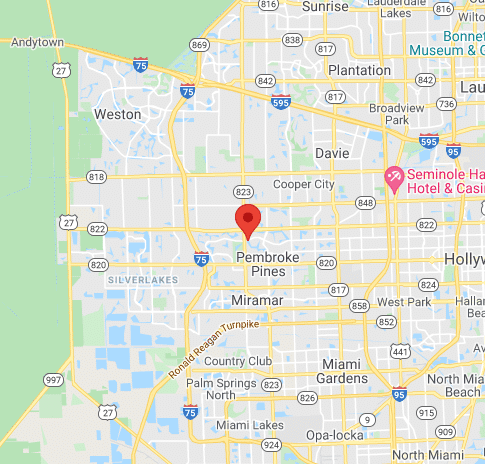
Flamingo Falls Eye Care has provided specialized corneal care to the Pembroke Pines community since 1994, and our office near Flamingo Road and Sheridan Street now offers advanced corneal topography and custom scleral lens fitting for patients living with keratoconus.
A cone-shaped cornea does not have to mean a lifetime of blurry, unstable vision, and our team is here to guide you every step of the way.
Clinical Overview and Patient Experience
Patients often come to us after years of prescription changes that never quite sharpen their vision the way they expect. That pattern alone can be exhausting, and many arrive frustrated before they even sit down in the exam chair. Teenagers newly diagnosed with keratoconus sometimes carry a quiet worry about driving, sports, or simply keeping up in a classroom, and their parents carry a version of that same worry too.
Cost is another concern we hear often, since specialty lenses cost more than standard glasses or soft contacts. We walk through insurance benefits and financing options before recommending a specific lens, so nobody feels pressured into a decision. Discomfort from earlier, ill-fitting lenses is a common complaint, and our fitting process is built specifically to solve that problem. Patience defines how we approach every keratoconus case, because the right fit is worth the extra time it takes to find.
Parents, in particular, want to know whether a diagnosis will limit their child’s activities, and we take the time to answer that question honestly rather than glossing over it. Sports, screen time, and even something as simple as a school play can all continue with the right lens on board. College-bound students sometimes worry about managing lens care away from home for the first time, so we build a practical routine with them before they leave. Nobody should feel like keratoconus defines what they can or cannot do with their life.
Clinical Options and Treatment Comparison
Keratoconus management depends heavily on how advanced the corneal irregularity has become, and no single lens or procedure fits every patient. The comparison below outlines four approaches we commonly discuss during a keratoconus consultation.
| Corneal Topography Surveillance | Early or suspected keratoconus | Detailed corneal mapping to track curvature changes over time | Every 6 to 12 months |
| Scleral Lens Fitting | Moderate to advanced keratoconus | Custom fit biocompatible polymer lenses that vault over the irregular cornea | Every 12 months once stable |
| Corneal Collagen Cross Linking Referral | Progressive, documented steepening | Referral for a procedure that strengthens corneal collagen fibers to halt progression | Follow up per specialist protocol |
| Standard Rigid Gas Permeable Lenses | Mild, early stage cases | A firmer lens surface that can mask minor corneal irregularity | Every 12 months |
The Financial and Clinical Value of Timely Care
Waiting to address early symptoms of keratoconus tends to make treatment more complicated, not less. A patient diagnosed early, while the cornea is only mildly irregular, often does well with a standard rigid lens or an early referral for collagen cross-linking, both of which are comparatively affordable. Once the condition progresses further, scleral lenses become the more likely path, and while they are effective, they also represent a larger investment of both time and money.
Progression itself carries a cost beyond the exam room. Blurred or fluctuating vision affects school performance, job duties that involve driving or fine-detail work, and everyday confidence. Regular corneal topography lets our team catch that progression early, often while more conservative and affordable options remain on the table. We always explain, in plain terms, how today’s decision affects tomorrow’s treatment options and their price.
Replacing lenses more frequently than necessary is another hidden cost we help patients avoid. A poorly fitted lens purchased elsewhere often needs to be redone within months, while a properly fitted scleral lens from our office can perform reliably for a full year or more. That kind of durability matters just as much as the upfront price when a family is budgeting for specialty eye care. In our experience, getting the fit right the first time is almost always the more economical path in the end.
Procedural Workflow and Biological Mechanics
Structural Mechanics of Keratoconus
The cornea is normally a smooth, dome-shaped structure made largely of collagen fibers arranged in a precise, layered pattern that keeps its curvature consistent. In keratoconus, those collagen fibers weaken and lose some of their organized structure, which allows the cornea to gradually thin and bulge outward into a cone shape. That irregular curvature scatters incoming light rather than focusing it cleanly onto the retina, which produces the blurred, distorted vision patients describe.
Genetics play a role in many cases, and chronic eye rubbing, often linked to allergies or ocular surface disease, can accelerate thinning. Corneal topography captures this irregularity by mapping thousands of points across the corneal surface, generating a color-coded picture of exactly where the steepening is occurring. Once a cornea becomes irregular enough, standard glasses or soft contacts can no longer correct vision effectively, so a rigid or scleral lens may be necessary to create a smooth new refractive surface over the irregular cornea.
Your Path Through Care
- Comprehensive intake and history. We review symptoms, family history, and any history of frequent eye rubbing or allergies.
- Corneal topography mapping. A detailed scan measures corneal curvature and identifies the pattern and severity of the cone.
- Diagnosis and staging. Dr. Balaguer classifies the keratoconus stage based on topography results and visual acuity testing.
- Lens trial fitting. Depending on severity, we trial rigid gas permeable or scleral lenses to find the most comfortable, sharpest option.
- Custom lens ordering. Once we confirm the ideal fit, we order a custom scleral lens to precise specifications.
- Follow-up adjustment visits.Fine-tuning ensures the lens vaults comfortably over the cornea without pressure points.
- Long-term monitoring. Annual topography and lens checks track stability and comfort over time.
Patient Insights and Local Outcomes
“After two years of lenses that never felt right, the scleral lens fitting at Flamingo Falls finally gave me a full day of clear, comfortable vision,” said a patient who commutes to work via I-75 from the Monarch Lakes (33027) area. A parent from near the Flamingo Falls Shopping Center shared that having corneal topography results explained in plain language made her teenager’s diagnosis far less frightening.
Patients throughout Pembroke Pines, including the Avalon (33025) and Pasadena Lakes (33024) neighborhoods, appreciate that our office has tracked keratoconus cases for decades rather than treating each visit as an isolated event. Stopping by after a workout at the nearby LA Fitness or on the way to run errands around Flamingo Road has become part of the routine for several longtime patients managing this condition.
Several local high school and college students have found their way to our office through word of mouth within the Pembroke Pines community, often after a parent or coach noticed squinting or frequent eye rubbing. Word travels quickly in a neighborhood this connected, and referrals from satisfied families remain one of the most common reasons new keratoconus patients call us first. That kind of grassroots trust, built one patient at a time since 1994, is not something any advertising campaign can replicate.
Frequently Asked Questions
Is scleral lens fitting painful?
No, scleral lenses rest on the white part of the eye and vault over the cornea, which most patients find more comfortable than standard rigid lenses. Some adjustment is normal during the first few wears.
Will keratoconus keep getting worse over time?
Progression varies significantly from person to person, and it often slows or stabilizes in a patient’s thirties. Regular corneal topography helps our team catch and respond to any changes early.
How much do scleral lenses typically cost?
Scleral lenses cost more than standard contacts because they are custom-fabricated, and pricing depends on the complexity of the fit. We review insurance coverage and payment options during your consultation so costs are clear upfront.
How long does the scleral lens fitting process take?
Most patients complete fitting within two to three visits over several weeks. Fine-tuning after the initial fitting ensures long-term comfort and sharp vision.
Schedule Your Keratoconus Consultation in Pembroke Pines
Living with unstable, blurry vision is not something you have to accept as permanent. Schedule your keratoconus evaluation online today or call our Pembroke Pines office directly at 1.954.433.1490. Flamingo Falls Eye Care is located at 1770 NW 122nd Terrace, Pembroke Pines, FL Silver Lakes (33026), with flexible hours throughout the week to fit your schedule.
Scleral Lenses
Flamingo Falls Eye Care also offers scleral lenses to treat keratoconus. Keratoconus is a condition that causes an irregular cornea shape. Scleral contact lenses are gas permeable lenses with a slightly larger diameter. They cover your pupil, iris, and part of your sclera — the white part of your eye — and correct distortion caused by an abnormal cornea.
Our Community
Flamingo Falls Eye Care proudly serves patients throughout Pembroke Pines and the surrounding Pasadena Lakes (33024), Avalon (33025), Silver Lakes (33026), Monarch Lakes (33027), and Pembroke Falls (33028) ZIP codes. Our office sits near the Flamingo Road and Sheridan Street intersection, with easy commuter access from I-75 for patients traveling from across the South Florida metropolitan area. Neighbors from the Flamingo Falls Shopping Center corridor and the LA Fitness foot traffic area regularly stop in for corneal health checks as part of their weekly routines.
Business Hours
Monday: 9:00AM - 5:00PM
Tuesday: 9:00AM - 7:00PM
Wednesday: 9:00AM - 5:00PM
Thursday: 9:00AM - 7:00PM
Friday: 9:00AM - 5:00PM
Saturday: 9:00AM - 3:00PM
Sunday: CLOSED
Dry Eye Rescue
Use Discount Code "FFEC10" at checkout!